From Desert to Powerhouse: The Rise of Solar Energy
In the scorching deserts of Rajasthan lies Bhadla—a place where temperatures touch 48°C and sandstorms are common.
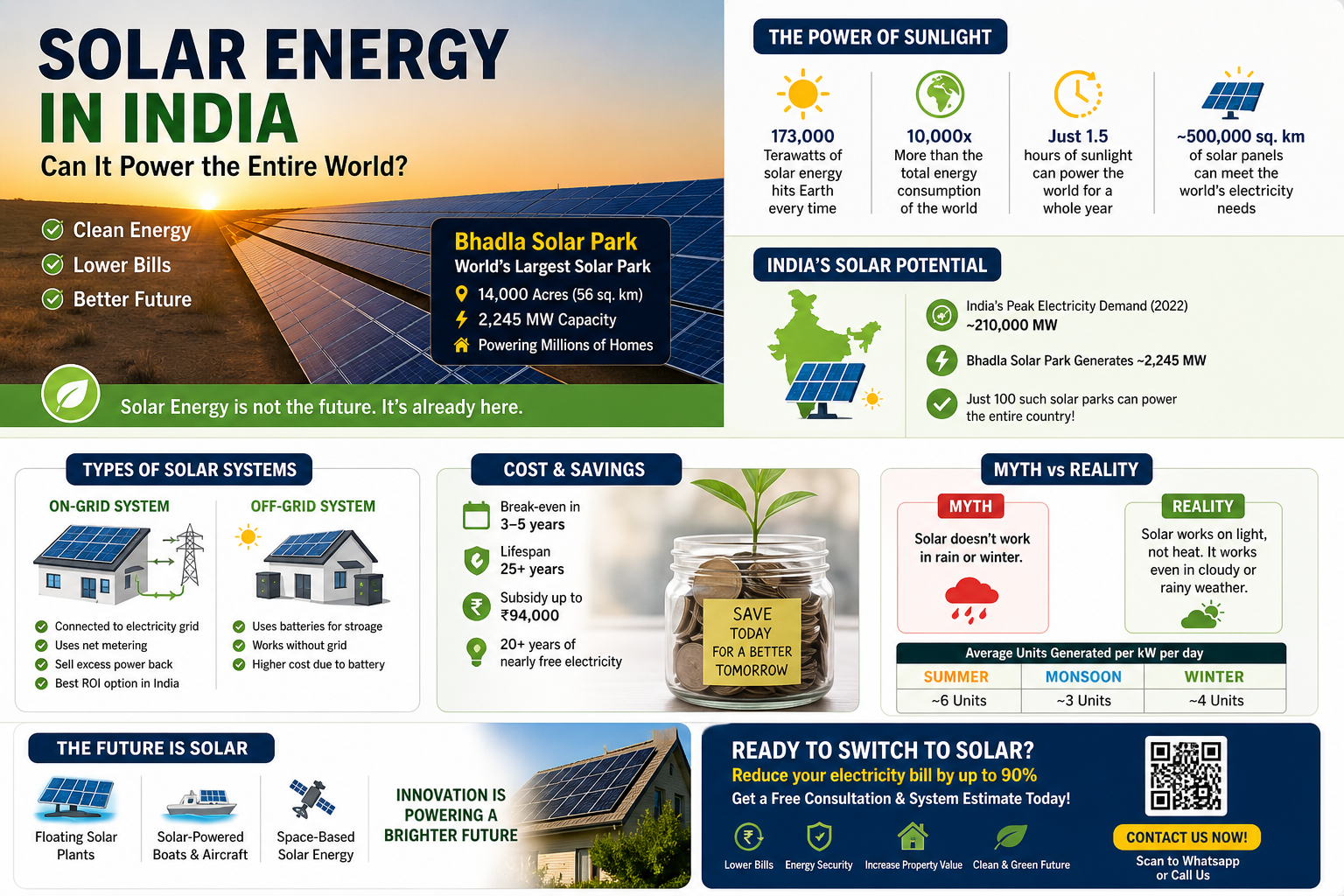
Yet today, this same region is home to the Bhadla Solar Park, the largest solar power plant in the world.
- Covers 14,000 acres (56 sq. km)
- Generates 2,245 MW of electricity
- Powers millions of homes
This transformation isn’t just impressive—it proves one thing:
Solar energy is not the future. It’s already here.
Can Solar Energy Power the Entire World?
Let’s talk facts:
- Earth receives 173,000 terawatts of solar energy
- That’s 10,000× more than global consumption
- Just 1.5 hours of sunlight = 1 year of global energy needs
So what’s the catch?
You don’t need to cover the entire planet with solar panels.
- A 254 km × 254 km area could power the world
- Realistically: ~500,000 sq. km globally
That’s roughly:
👉 9,000 solar parks like Bhadla
India’s Solar Potential: Massive & Untapped
India’s peak electricity demand:
- ~210,000 MW
Bhadla produces ~2,245 MW
👉 Just 100 such solar parks could power the entire country.
But here’s the smarter insight:
We don’t need only mega solar parks—we need distributed solar systems.
Why Aren’t We Running Fully on Solar Yet?
Despite the potential, there are real challenges:
1. Geopolitics
Countries controlling solar hubs gain massive power (like oil nations today)
2. Transmission Loss
Electricity loses efficiency over long distances
3. Maintenance
Dust and sand reduce performance
(Bhadla uses 2,000+ cleaning robots)4. High Initial Investment
Large-scale plants require huge capital
5. Panel Lifespan
Replacement cost is significant
Avg lifespan: 25 years
The Real Game-Changer: Rooftop Solar in India
Instead of relying only on large solar farms, the smartest shift is happening at the individual level.
Why Rooftop Solar is Winning
✅ No transmission loss
✅ No geopolitical dependency
✅ Lower electricity bills
✅ Easy maintenance
✅ Government subsidies available
This is where real adoption is happening—and where you benefit directly
Types of Solar Systems for Homes
1. On-Grid Solar System (Recommended)
- Connected to electricity grid
- Uses net metering
- Sell excess power back
👉 Best ROI option in India
2. Off-Grid Solar System
- Uses batteries for storage
- Works without grid
👉 Higher cost due to battery
Is Solar Worth It in India?
Let’s break it down:
- Break-even: 3–5 years
- Lifespan: ~25 years
- Subsidy: up to ₹94,000
👉 After recovery, you get:
20+ years of nearly free electricity
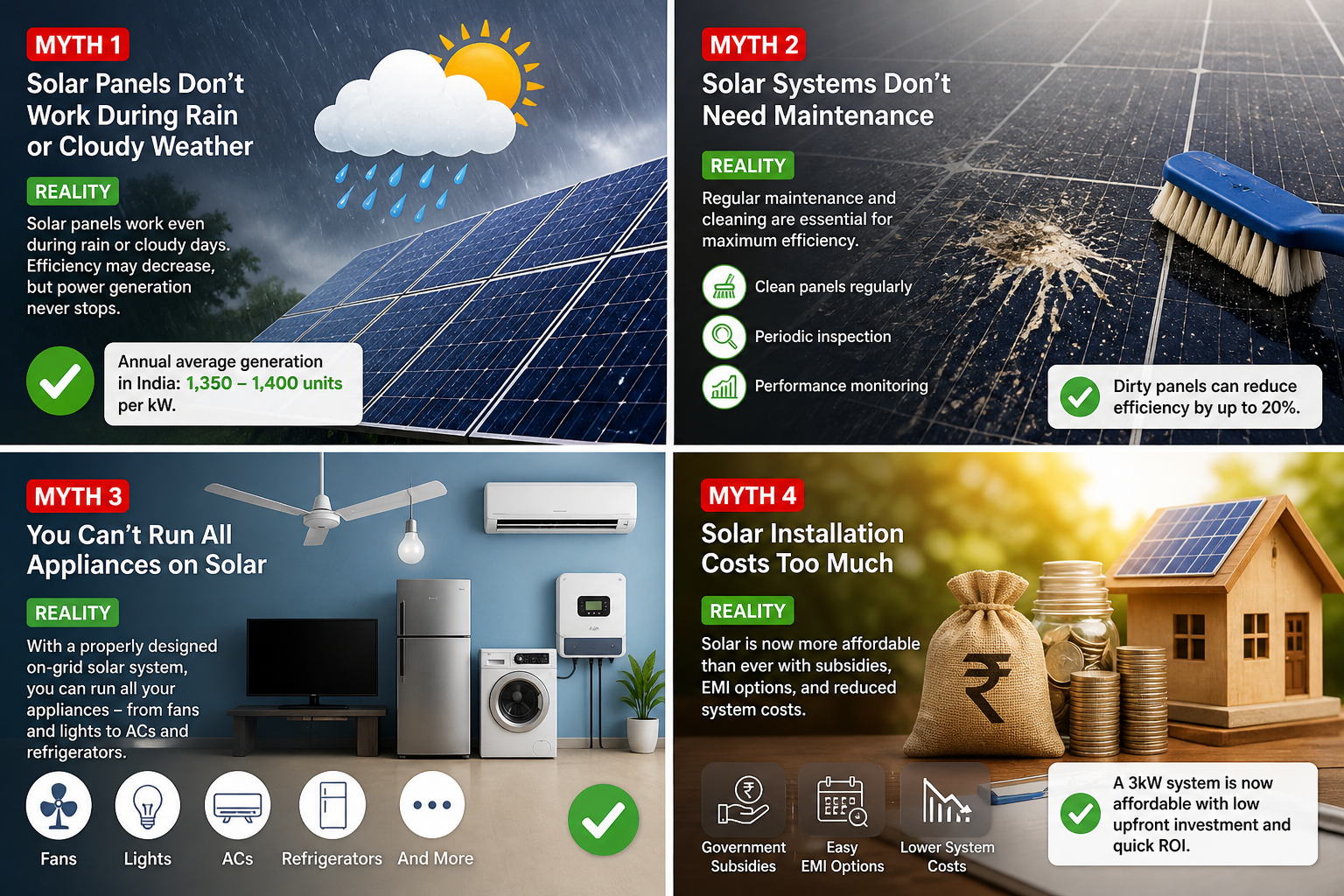
Biggest Myth About Solar Energy
“Solar doesn’t work in rain or winter”
Reality:
- Summer: ~6 units/day
- Monsoon: ~3 units/day
- Winter: ~4 units/day
Solar works on light—not heat.
So yes, it still works even in cloudy weather.
The Hidden Downsides of Solar Energy
Let’s be real—solar isn’t perfect.
1. Manufacturing Impact
- Requires metals like silver, copper
- Mining causes pollution
2. Recycling Problem
- Not yet cost-effective
- Future waste issue
👉 Still, compared to coal and fossil fuels:
Solar is significantly cleaner and more sustainable
Future of Solar Energy
The innovation pipeline is insane:
- Floating solar plants (Kerala, Maldives)
- Solar-powered boats & aircraft
- Space-based solar energy (13× more efficient)
Example:
- Solar plane flew 40,000 km without fuel
Final Verdict: Should You Invest in Solar?
Let’s simplify it:
| Factor | Reality |
|---|---|
| Cost | High upfront, huge long-term savings |
| Reliability | Works in most weather |
| ROI | Excellent (3–5 years) |
| Future | Rapidly growing |